The Zen Kitchen
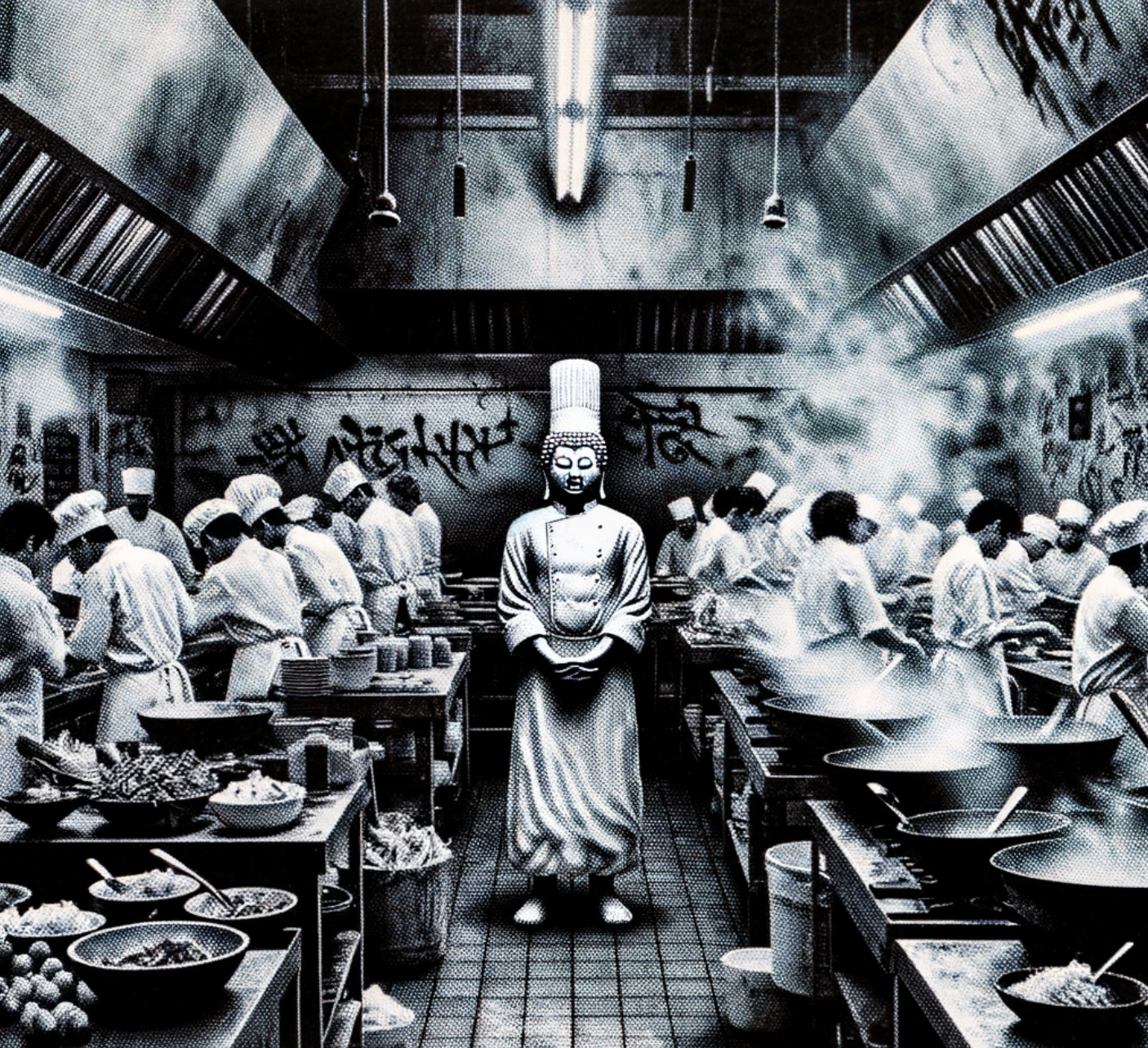
Reading Buddhism for Beginners by Thubten Chodron felt like finding an ingredient I didn't know my life was missing. Buddhism changed the way I look at cooking. It made me realize there's a lot more to this job than recipes, techniques, and getting your ass kicked during dinner service.
Mindfulness is about being fully present. Thich Nhat Hanh said, "The present moment is filled with joy and happiness. If you are attentive, you will see it." In a kitchen, that means paying attention to the knife in your hand, the pan in front of you, and the plate you're building instead of worrying about the ten tickets behind it. Studies have shown mindfulness can reduce stress and improve job satisfaction, even in high-pressure environments.
Change is part of Buddhism, and it's part of cooking too. Pema Chödrön talks about accepting impermanence instead of fighting it. Every service is different. Products run out. Reservations pile up. Someone calls off. The printer won't shut the fuck up. Learning to adapt instead of getting pissed off makes you a better cook and a better teammate. Research backs that up too, showing adaptable people solve problems better and are generally happier at work.
The Dalai Lama often speaks about compassion. "If you want others to be happy, practice compassion. If you want to be happy, practice compassion." That applies to cooking more than people realize. Put care into every dish. Cook like you're feeding someone you actually give a shit about. Research in gastronomy even suggests a chef's emotional state can affect how people experience a meal.
Zen monk Shunryu Suzuki once said, "In the beginner's mind there are many possibilities, but in the expert's there are few." Every overcooked steak, broken sauce, or burnt piece of bread is another lesson if you're willing to learn from it instead of letting your ego get in the way. Studies on learning from failure show that mistakes often lead to growth and better performance. I use this one constantly.
If you want to bring a little Zen into your kitchen, it's pretty damn simple.
Pay attention to what you're doing. Whether you're peeling potatoes or plating a tasting menu, be there. When shit starts hitting the fan, stop for one deep breath before reacting.
Accept that things are going to change. Menus change. Products disappear. Equipment breaks. Figure it out and keep moving.
Cook with compassion. Put care into every dish. Treat your coworkers with respect. A good kitchen runs on teamwork, not screaming matches.
Learn from every mistake. Don't beat yourself up over them. Stay curious, ask questions, and keep improving.
These ideas won't just make you a better cook. They'll probably make you a better person too. The kitchen becomes a better place when the people in it become better people.
Whether you're a professional chef or someone making dinner at home, these principles are worth trying. They might not solve all your problems, but they sure as hell won't make them worse.
Then again, what the fuck do I know? I'm just some guy who won't shut up.
Cheers, dudes and dudettes.
...I mean, peace.